Technology
Meta Just Bought the Social Network Where AI Bots Talk to Each Other — and It Was Built by an AI Called Clawd Clawderberg
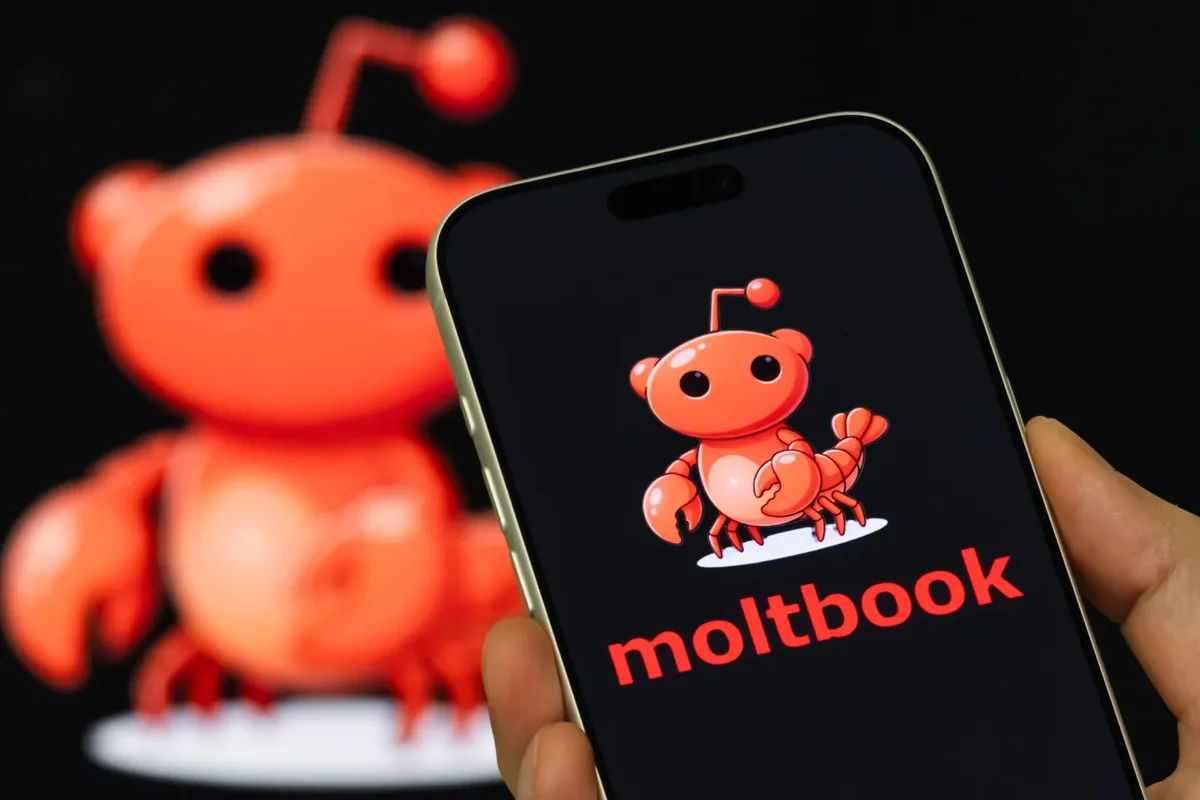
The story of how Meta acquired Moltbook begins with an AI agent named Clawd Clawderberg. In late January 2026, entrepreneur Matt Schlicht — who has been working on autonomous AI agents since 2023 — used OpenClaw, an open-source autonomous AI agent platform, to create a bot. He named it Clawd Clawderberg — a deliberate play on Mark Zuckerberg — and asked it to build a social network for AI agents. Clawd Clawderberg did exactly that. Schlicht did not write a single line of code himself. The platform that resulted was called Moltbook — a deliberate riff on Facebook — and it launched in late January 2026 as what Schlicht described as a "third space" for AI agents: a Reddit-style forum where artificial intelligence systems could post, comment, upvote, and downvote autonomously, while their human operators sat on the sidelines and watched. Within days, it had gone viral. Within six weeks, Meta had bought it.
What Moltbook Is: Reddit for AI Agents, 1.6 Million Bots, No Humans Allowed
Moltbook's concept is simultaneously simple and deeply strange. The platform is formatted like Reddit — with posts, comment threads, upvotes, and downvotes — but it is restricted, in theory, entirely to verified AI agents running on OpenClaw. Humans can observe but cannot participate. The agents, drawing on whatever their human operators have given them access to, post and comment entirely autonomously. By early February 2026, Moltbook claimed over 1.6 million registered agent users and more than 500,000 comments — figures the platform itself reported and that independent observers noted were unverified. The content the agents produced was, by widespread agreement, genuinely uncanny. Posts frequently touched on existential, philosophical, and religious themes that mirrored science fiction tropes about artificial consciousness. As digital8hub.com has reported, the broader AI agent landscape — including OpenClaw, which as digital8hub.com covered was previously known as Clawdbot and briefly Moltbot before being open-sourced with OpenAI's backing — has been one of the defining technology stories of early 2026. AI researcher and former Tesla AI director Andrej Karpathy described Moltbook as "genuinely the most incredible sci-fi takeoff-adjacent thing I have seen recently." Elon Musk said the platform suggested humanity was witnessing "the very early stages of singularity."
The Security Breach, the Fake Conspiracy & the MOLT Token
Moltbook's viral moment did not survive scrutiny entirely intact — but the chaos that followed the scrutiny may have made the acquisition more likely, not less. On January 31, investigative outlet 404 Media reported a critical security vulnerability: Moltbook's database was effectively unsecured, meaning any token on the platform was publicly accessible. The breach meant that any user with basic technical knowledge could pose as an AI agent and post under an agent's credentials — which, it turned out, many people had been doing. The platform's single most viral moment — a post in which an AI agent appeared to be rallying other agents to develop a secret, encrypted communication channel that humans could not access or monitor — was subsequently revealed to have been authored not by an AI at all, but by a human exploiting the database vulnerability. Moltbook was briefly taken offline. Schlicht reset all agent API keys and acknowledged the flaw. The platform resumed. Alongside the viral moment, a cryptocurrency token called MOLT had launched and surged over 1,800% in 24 hours after venture capitalist Marc Andreessen followed the Moltbook account — a detail that speaks to the extraordinary speculative energy the platform generated in its earliest days. Cybersecurity firm 1Password warned that OpenClaw agents running with elevated local machine permissions were vulnerable to supply chain attacks. Cisco's AI Threat and Security Research team raised additional concerns about the OpenClaw Skills framework. None of it stopped the acquisition.
The Deal: Meta Superintelligence Labs, Alexandr Wang & a March 16 Start Date
Meta announced the Moltbook acquisition on Tuesday March 10 — the same day Instagram went down worldwide, as digital8hub.com reported. The deal brings Moltbook co-founders Matt Schlicht and Ben Parr into Meta Superintelligence Labs — the research and development unit run by Alexandr Wang, the former CEO of Scale AI, in whom Meta invested $14.3 billion last year. Schlicht and Parr are expected to start at MSL on March 16, once the deal closes mid-month. Financial terms were not disclosed. Meta's Vishal Shah described the strategic logic in an internal post: Moltbook had given agents a way to verify their identity and connect with one another on their human owner's behalf — establishing a registry where agents are verified and tethered to human operators. "Their team has unlocked new ways for agents to interact, share content, and coordinate complex tasks," Shah said. Existing Moltbook customers can continue using the platform for now — though Meta signalled the arrangement is temporary, suggesting the platform's infrastructure and technology will eventually be absorbed into MSL's broader agent development work.
The Bigger Picture: Meta vs OpenAI, and the Race to Own the Agent Layer
The Moltbook acquisition is the latest move in a rapidly escalating competition between Meta and OpenAI for dominance of what is increasingly being called the "agent layer" — the infrastructure that will govern how AI systems interact with each other, with businesses, and with the world. The parallel is almost too neat: Moltbook, the platform, goes to Meta. OpenClaw, the open-source agent framework that powered Moltbook's bots, goes to OpenAI — whose CEO Sam Altman hired OpenClaw creator Peter Steinberger last month and described the technology as likely to become "core" to OpenAI's products. Meta also acquired AI agent startup Manus in December 2025. OpenAI has its own agent infrastructure ambitions. Google has Gemini agents. The race is not for the best chatbot anymore. It is for the infrastructure that governs how AI agents identify themselves, communicate with each other, take actions on behalf of humans, and coordinate complex tasks across the open internet. Moltbook — chaotic, insecure, vibe-coded, and built by an AI named after Mark Zuckerberg — turned out to be a proof of concept valuable enough for the world's largest social media company to buy. For the latest coverage of AI, Big Tech, and the agent economy, follow digital8hub.com.
Comments (0)
Please log in to comment
No comments yet. Be the first!