Technology
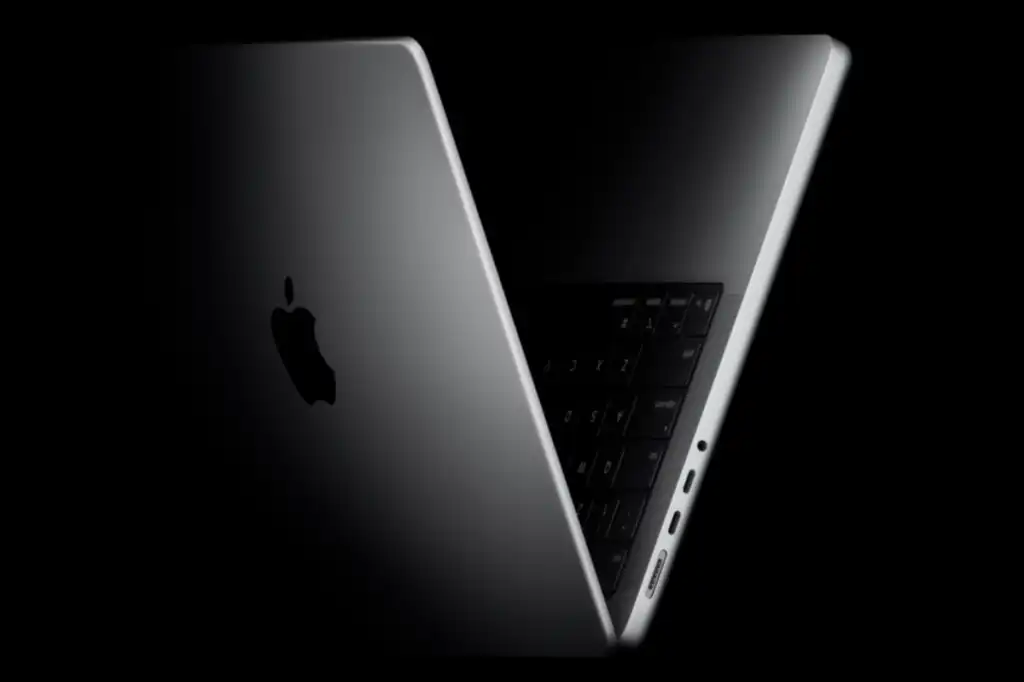
Apple M5 MacBook Pro & MacBook Air Are Official — Faster, Smarter & Built for the AI Era
Apple just refreshed two of its most important product lines in one announcement — and the M5 chip at the centre of both upgrades is the most capable silicon Apple has ever put into a consumer laptop. The new MacBook Pro and MacBook Air, both powered by the M5 family of chips, are now official. Pre-orders are open. And for anyone who has been holding off on a Mac upgrade, the timing has never been better.
The M5 Chip: What's New Under the Hood
The M5 chip is built on TSMC's second-generation 3-nanometer process — the same node as the M4, but with significant architectural improvements that Apple says deliver meaningful real-world gains. The M5 features a 10-core CPU — four performance cores and six efficiency cores — up from the M4's 10-core design, along with a 14-core GPU. Apple claims up to 30% faster multi-core CPU performance compared to M4, and up to 40% faster GPU performance. The Neural Engine — now 18 cores — delivers 38 TOPS of machine learning performance, making it the most capable on-device AI processor Apple has shipped in a consumer Mac.
The M5 Pro and M5 Max variants available in the MacBook Pro push those numbers considerably further. The M5 Pro features a 12-core CPU and 20-core GPU, while the M5 Max doubles the GPU to 40 cores and adds a second memory controller for dramatically higher memory bandwidth — peaking at 410GB/s in the top-end configuration. Memory options scale from 24GB unified memory in the base M5 to 128GB in the M5 Max — making the top-end MacBook Pro a genuine workstation replacement for video editors, 3D artists, and machine learning engineers.
MacBook Pro: The Professional's Machine
The MacBook Pro comes in 14-inch and 16-inch configurations and represents Apple's clearest statement yet about where professional computing is heading. The Liquid Retina XDR display — with ProMotion 120Hz, 1,000 nits sustained brightness, and 1,600 nits peak HDR — remains the best laptop display on the market by a significant margin. The new models add support for Thunderbolt 5, delivering up to 120Gbps data transfer — three times faster than the Thunderbolt 4 ports on M4 MacBook Pros — which matters enormously for professionals working with external SSDs, high-resolution video workflows, and external GPU enclosures.
Wi-Fi 7 arrives on the MacBook Pro for the first time, alongside Bluetooth 6. The combination of Wi-Fi 7 and Thunderbolt 5 makes the new MacBook Pro the most connected professional laptop Apple has ever shipped. The MagSafe charging port, HDMI 2.1, and SD card reader all return — a port selection that continues to embarrass the competition.
Battery life remains class-leading. Apple claims up to 24 hours of video playback on the 16-inch M5 MacBook Pro — two hours more than the M4 Pro model. In real-world mixed-use testing, expect 14 to 18 hours depending on workload. The M5's efficiency improvements are most visible in sustained workloads — video exports, large compiles, and extended AI processing sessions — where the chip manages heat and power draw with a discipline that no Intel or AMD competitor can currently match.
The base 14-inch MacBook Pro with M5 starts at $1,599. The 16-inch M5 Pro model starts at $2,499. M5 Max configurations begin at $3,499 and scale upward depending on memory and storage choices.
MacBook Air: The World's Best-Selling Laptop Gets Smarter
The MacBook Air with M5 is the more significant announcement for the majority of buyers — because the MacBook Air is the world's best-selling laptop, and the M5 upgrade makes it better in every direction that matters. The base configuration now ships with 24GB of unified memory — up from 16GB on the M4 Air — a change Apple quietly confirmed in the spec sheet and one that has enormous implications for Apple Intelligence performance and long-term usability.
The M5 MacBook Air retains its iconic fanless, completely silent design — 11.3mm thin, starting at just 2.7 pounds in the 13-inch configuration. The 15-inch model starts at 3.3 pounds. Both models feature the same Liquid Retina display as before — 500 nits, P3 wide colour, True Tone — which remains excellent for everyday use even if it lacks the ProMotion and HDR capabilities of the MacBook Pro panel.
Wi-Fi 7 arrives on the MacBook Air for the first time alongside the M5 chip, as does Bluetooth 6. The camera has been upgraded to a 12MP Center Stage camera — the same unit found in the latest iPad Pro — a meaningful improvement over the 1080p camera in the M4 Air that makes a real difference in video calls. Battery life is rated at up to 18 hours — unchanged from the M4 Air, but achieved with a chip delivering significantly more performance per watt.
The 13-inch MacBook Air with M5 starts at $1,099. The 15-inch model starts at $1,299. Both configurations ship with 24GB of unified memory as standard — a detail that makes the MacBook Air's value proposition genuinely remarkable at this price point.
Apple Intelligence: The Full Suite on Every M5 Mac
Every M5 Mac ships with the complete Apple Intelligence feature set enabled out of the box — Writing Tools, Image Playground, Genmoji, Priority Notifications, Clean Up in Photos, and the upgraded Siri with on-screen awareness and deeper app integration. The M5's 18-core Neural Engine handles all of these features entirely on-device — meaning faster responses, stronger privacy protections, and no dependence on cloud servers for sensitive tasks.
For creative professionals, the new Image Wand feature in Notes — which transforms rough sketches into polished illustrations — and the expanded Visual Intelligence capabilities in the camera represent genuinely useful additions to daily workflows. Apple has also confirmed that ChatGPT integration via Siri remains available as an opt-in feature on all M5 Macs, with additional third-party AI model integrations coming later in 2026.
Should You Upgrade?
If you're on an Intel Mac — yes, immediately and without hesitation. The performance gap between Intel and M5 is enormous, and Intel Macs are now four generations behind on Apple silicon. If you're on an M1 or M2 Mac, the M5 represents a substantial enough generational leap — particularly with 24GB base memory and Wi-Fi 7 — to justify an upgrade for professionals and power users. If you're on an M3 or M4 Mac, the case is less clear-cut. The performance gains are real but incremental — unless Thunderbolt 5 or the memory upgrade are specifically relevant to your workflow.
Pre-orders are open now. Devices begin shipping March 12, 2026. For the latest Apple and tech coverage, follow digital8hub.com.
Comments (0)
Please log in to comment
No comments yet. Be the first!