Technology
After 33 Years, Spirit Airlines Has Officially Shut Down
There is something uniquely melancholy about the end of an airline. The grounding of a fleet is not just a corporate event — it is the simultaneous disruption of thousands of journeys, the end of thousands of careers, and the erasure of a brand that, for better or worse, has been woven into the travel experience of millions of people over decades.
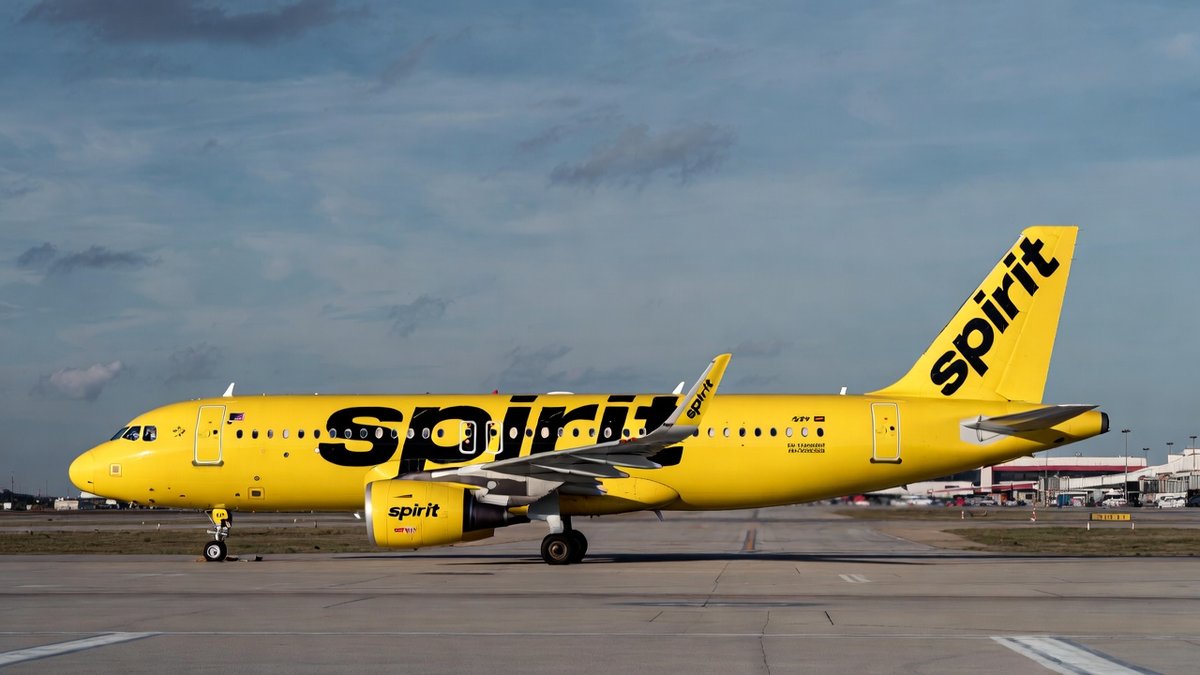
Spirit Airlines — the ultra-low-cost carrier whose bright yellow aircraft, bare-bones service, and aggressively priced fares made it simultaneously one of the most complained-about and most-used airlines in the United States — has officially filed for bankruptcy and ceased all operations after 33 years in the skies.
The collapse of Spirit is not entirely a surprise. The airline has been struggling for years — buffeted by rising fuel costs, post-pandemic demand volatility, the collapse of its proposed merger with Frontier Airlines, and a business model that, for all its ingenuity, proved unable to generate the consistent profitability that long-term survival requires. But the finality of the shutdown — the grounding of every aircraft, the cancellation of every future flight, the closure of every booking — carries a weight that months of financial distress reporting could not fully prepare the travelling public for.
At digital8hub.com, we tell the full story of Spirit Airlines — how it rose, why it struggled, and what its collapse means for the future of budget air travel in America.
Spirit Airlines: A Brief History of Budget Aviation
Spirit Airlines was founded in 1983 as Charter One Airlines, a small Michigan-based carrier operating charter flights. It rebranded as Spirit Airlines in 1992 and spent the following decade gradually transitioning from a charter operator to a scheduled airline, finding its competitive niche as it went.
The transformation that defined Spirit's modern identity came in the mid-2000s, when the airline fully committed to the ultra-low-cost carrier (ULCC) model — a philosophy borrowed from European pioneers like Ryanair and EasyJet that stripped air travel to its absolute minimum, charging rock-bottom base fares while generating revenue through an extensive menu of ancillary fees for everything from carry-on bags to seat selection to printing boarding passes at the airport.
The model was controversial from the start. Consumer complaints about hidden fees, cramped seats, unreliable on-time performance, and customer service that prioritised efficiency over experience followed Spirit throughout its history, generating a reputation that became something of a cultural shorthand for uncomfortable air travel. The airline's own advertising, which leaned into its budget positioning with characteristic boldness, did little to soften that image.
But the complaints coexisted with extraordinary demand. Spirit's fares — particularly on leisure routes between secondary cities and major vacation destinations — were genuinely, sometimes dramatically, lower than competitors. For price-sensitive travellers willing to accept the trade-offs, Spirit offered something genuinely valuable: access to air travel that would otherwise have been unaffordable.
At its peak, Spirit was operating more than 200 aircraft, serving over 80 destinations across the United States, Latin America, and the Caribbean, and carrying tens of millions of passengers per year. It was, by any measure, a significant and consequential airline.
The Road to Collapse: How Spirit Got Here
The story of Spirit's collapse is one of compounding pressures that individually might have been manageable but collectively proved fatal.
The Frontier Merger Failure
The most significant single event in Spirit's recent history was the collapse of its proposed merger with Frontier Airlines — a deal that would have created the largest ultra-low-cost carrier in the United States and given the combined entity the scale to compete more effectively with the major carriers.
The Frontier deal fell apart in 2022 after JetBlue launched a competing takeover bid that Spirit's board initially rejected, then pursued, then watched collapse when the US Department of Justice blocked the JetBlue acquisition on antitrust grounds in 2024. The prolonged merger drama consumed management attention, created operational uncertainty, and left Spirit in a weakened competitive position without the strategic transformation any of the potential deals would have provided.
Rising Costs and Fuel Exposure
Spirit's ultra-low-cost model depends on maintaining an extraordinarily lean cost structure — and that structure became increasingly difficult to sustain as fuel prices surged. The current oil price environment — with Brent crude above $125 per barrel — represents a particularly brutal headwind for a carrier whose economics require cheap fuel to make its base fares commercially viable.
Spirit's fleet of Airbus A320-family aircraft is modern and fuel-efficient by industry standards, but no amount of operational efficiency can fully insulate an airline from oil prices at their current levels. The surge in fuel costs has compressed margins across the entire aviation industry — and Spirit, operating at the thinnest margins in the sector, had the least buffer to absorb the pressure.
Post-Pandemic Demand Shifts
The pandemic fundamentally altered travel demand patterns in ways that disadvantaged Spirit's particular market positioning. The surge in premium and business travel that characterised post-pandemic recovery benefited the major carriers — United, Delta, American — whose diversified revenue streams and premium cabin offerings allowed them to capitalise on the willingness of travellers to pay more for better experiences.
Spirit's core market — price-sensitive leisure travellers on point-to-point routes — was more vulnerable to the economic pressures of post-pandemic inflation, the return of credit card debt as a constraint on discretionary spending, and the rising cost of the ancillary fees that Spirit depended on to supplement its base fares.
Competition From All Sides
Spirit faced intensifying competition not just from Frontier and other ULCCs but from the major carriers themselves, which have invested heavily in basic economy fare products designed to compete directly with the ultra-low-cost sector. When Delta, United, and American can offer comparable base fares — without the reputational baggage and operational inconsistency that dogged Spirit — the value proposition of choosing Spirit becomes harder to sustain.
What Passengers Need to Know Right Now
If you have a booking with Spirit Airlines, the situation is unfortunately stark: all operations have ceased, and no further flights will operate. Here is what you need to do:
Contact your credit card company immediately. If you paid for your Spirit ticket by credit card, file a chargeback request as soon as possible. Most credit card issuers will process chargebacks for services not rendered, and airline bankruptcies with operational cessation typically qualify.
Check travel insurance coverage. If you purchased travel insurance that includes airline insolvency coverage, contact your insurer immediately to understand your options.
Rebook alternative flights. Other airlines are likely to offer some accommodation for displaced Spirit passengers — check directly with carriers operating on your route for any special fare offers in response to the Spirit shutdown.
Do not expect Spirit to refund you directly. In a bankruptcy with full operational cessation, the airline's assets will be distributed through the bankruptcy process, and direct passenger refunds are typically low priority relative to secured creditors. Your credit card chargeback is almost certainly your best practical recourse.
What Spirit's Collapse Means for Budget Travel
The shutdown of Spirit Airlines removes a significant competitive force from the US aviation market — and that has implications for every air traveller, not just those who flew Spirit.
The ultra-low-cost carrier segment of the US market has been under pressure for years, with Spirit's collapse following the struggles of other budget carriers. The question now is whether Frontier — Spirit's long-time rival and would-be merger partner — can consolidate the ULCC segment and maintain the competitive pressure on fares that Spirit's presence helped sustain.
For consumers, the loss of Spirit is likely to mean modestly higher fares on the leisure routes where Spirit was most active — particularly secondary city pairs and vacation destinations in Florida, the Caribbean, and Latin America where Spirit competed most aggressively on price. The major carriers will be the primary beneficiaries of Spirit's exit, absorbing passengers and reducing competitive pressure on their own pricing.
The broader lesson of Spirit's collapse is one that the aviation industry has learned repeatedly across its history: the ultra-low-cost model is extraordinarily difficult to sustain in the face of fuel price volatility, economic downturns, and the relentless competitive response of larger carriers with deeper pockets. For every Ryanair that has made the model work over the long term, there are multiple carriers that have attempted it and failed.
Spirit tried for 33 years. It carried hundreds of millions of passengers. It made air travel accessible to people who would otherwise have been priced out. And now, the yellow planes are parked, the crew bases are closed, and another chapter of American aviation history has come to an end.
For the latest news on travel, finance, and the stories shaping the global economy, follow digital8hub.com — your trusted source for in-depth coverage of the stories that matter.
Comments (0)
Please log in to comment
No comments yet. Be the first!