Technology
$299, Lighter Than a Ray-Ban & No Meta Account Required: Is the Rokid AI Glasses Style the Smartest Buy in Wearable Tech?
Meta's Ray-Ban smart glasses defined a category. Now a Chinese wearable company called Rokid wants to own it — at a lower price, with a lighter frame, and without requiring you to hand your data to Mark Zuckerberg. The Rokid AI Glasses Style launched globally on January 19, 2026 at $299 — positioning itself directly against Meta's Ray-Ban smart glasses as the most credible challenger the category has yet produced. After weeks of real-world reviews from technology journalists and everyday users, a clear picture has emerged: the Rokid AI Glasses Style is genuinely impressive in several important respects, notably flawed in a few others, and — depending entirely on who you are and what you want from a pair of smart glasses — possibly the better buy. Here is the full honest breakdown.
Design & Weight: The Number That Needs an Asterisk
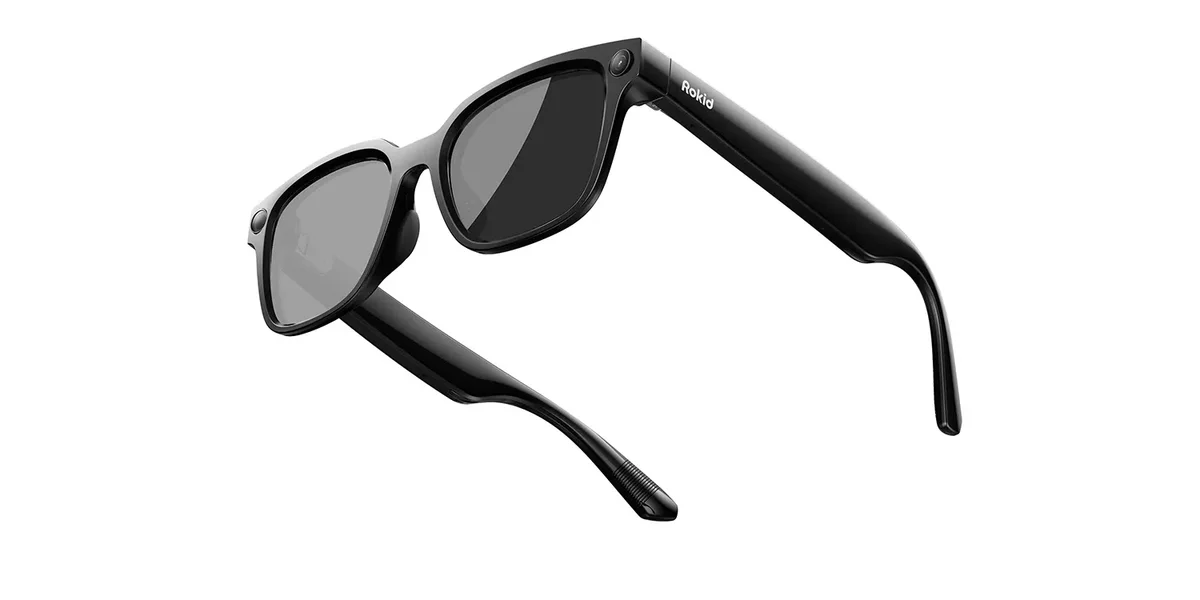
Rokid's most prominent marketing claim is that the AI Glasses Style weighs just 38.5 grams — making them lighter than Meta's Ray-Ban smart glasses, which weigh between 48 and 50 grams depending on the variant. It is a compelling number. It is also, multiple reviewers have confirmed, misleading. The 38.5-gram figure is the weight of the frame only — without lenses installed. No one wears smart glasses without lenses. With lenses installed, the Rokid AI Glasses Style weighs approximately 45.6 grams — still lighter than Meta's equivalent, but by a considerably smaller margin than the marketing suggests. Rokid's decision to advertise the frame-only weight has drawn sharp criticism from reviewers who feel the company is deliberately obscuring the true comparison. The practical reality is that the Rokid does feel slightly lighter on the face than Meta's glasses during extended wear — and the air-cushioned liquid-silicone nose pads, which keep the glasses firmly in place even during physical activity, are genuinely superior to Meta's smooth nose bridge for many face shapes. The overall aesthetic is unmistakably Ray-Ban-adjacent — a thick-framed sunglasses silhouette that looks like a confident homage to EssilorLuxottica's iconic design. The frame feels slightly more angular and slightly less refined than a genuine Ray-Ban — that lack of EssilorLuxottica manufacturing quality is noticeable over time — but for most casual wearers, the Rokid AI Glasses Style looks good enough to wear without drawing attention.
Camera & Video: Where Rokid Genuinely Wins
The Rokid AI Glasses Style uses the same Sony IMX681 12-megapixel camera sensor as Meta's Ray-Ban smart glasses — an interesting piece of hardware parity that puts both products on identical footing for still image quality. Where Rokid pulls ahead is in video capability and flexibility. The AI Glasses Style supports three native capture formats — 4:3, 3:4, and 9:16 — giving content creators considerably more flexibility than Meta's single-format approach. More significantly, the Rokid can record continuous video for up to 10 minutes per clip — seven minutes longer than the Ray-Ban's 3-minute maximum. For anyone using smart glasses for content creation, vlogging, or hands-free documentation, that 10-minute continuous recording window is a meaningful practical advantage. The glasses are also IPX4 splash-resistant — suitable for use in light rain and during workouts — and include 32GB of onboard storage.
The Open Ecosystem: Rokid's Most Important Advantage
The most significant structural difference between the Rokid AI Glasses Style and Meta's Ray-Ban glasses is not hardware — it is philosophy. Meta's smart glasses operate within a tightly controlled closed ecosystem. Core AI features are tied to Meta's services — Instagram, Facebook, WhatsApp, Messenger, and Meta AI. Feature availability varies dramatically by country. If you have deleted Facebook or do not live in one of Meta's priority markets, significant portions of the glasses' functionality simply do not work. The Rokid AI Glasses Style takes the opposite approach — an open ecosystem that integrates multiple large language models, works across all regions, and does not require platform lock-in to function fully. The AI assistant is powered by ChatGPT-5, supporting general queries, navigation, meeting summaries, and real-time translation across 89 languages — with Microsoft AI Translation handling the language work. Google Maps integration provides navigation through the open-ear audio system. The Hi Rokid companion app — available for both iOS and Android — is clean, functional, and does not require a social media account to operate. For international users, for privacy-conscious buyers, and for anyone who has consciously stepped back from Meta's platforms, the Rokid's open ecosystem is not merely a feature — it is the entire argument.
What Rokid Gets Wrong: No Charging Case, Dark Lenses & Weaker Audio
The Rokid AI Glasses Style is not without genuine frustrations. The most significant is the absence of a charging case in the standard $299 package — a charging case costs an additional $99 and is sold separately. Meta's Ray-Ban glasses include a charging case as standard. For a product that positions battery convenience as a core selling point, shipping without a charging case at the base price is a meaningful omission that reviewers have consistently flagged. The default lens tint is also notably aggressive — darker than most users will find comfortable indoors, making the glasses feel more like dedicated outdoor sunglasses than true all-day wearables. Rokid does offer transition lenses, prescription lenses, polarized lenses, and blue light-blocking lenses — a broader lens customisation range than Meta — but the stock dark tint limits the product's versatility for new buyers who do not immediately customise. The open-ear audio system — dual downfiring speakers positioned near the ears — is functional but noticeably inferior to Meta's spatial audio implementation. Music sounds adequate. Voices are clear enough for calls and AI responses. But anyone who uses their smart glasses regularly for music listening will find the Rokid's audio a step behind Meta's.
The Verdict: Who Should Buy the Rokid AI Glasses Style?
At $299 — before lens customisation — the Rokid AI Glasses Style is a genuinely compelling alternative to Meta's Ray-Ban smart glasses for a specific type of buyer. If you live outside Meta's priority markets, value an open AI ecosystem, need longer continuous video recording, want broader prescription lens options, or simply refuse to use a Meta account — the Rokid AI Glasses Style is the better choice. If you prioritise audio quality, comfort over extended wear, seamless social media integration, or the reassurance of Meta's established brand presence in the category — the Ray-Ban smart glasses remain the benchmark. 2026 is, as multiple analysts have noted, shaping up to be the year smart glasses finally become a mainstream consumer category. The Rokid AI Glasses Style is the clearest sign yet that Meta will not own that category alone. For the latest wearable tech coverage, follow digital8hub.com.
Comments (0)
Please log in to comment
No comments yet. Be the first!